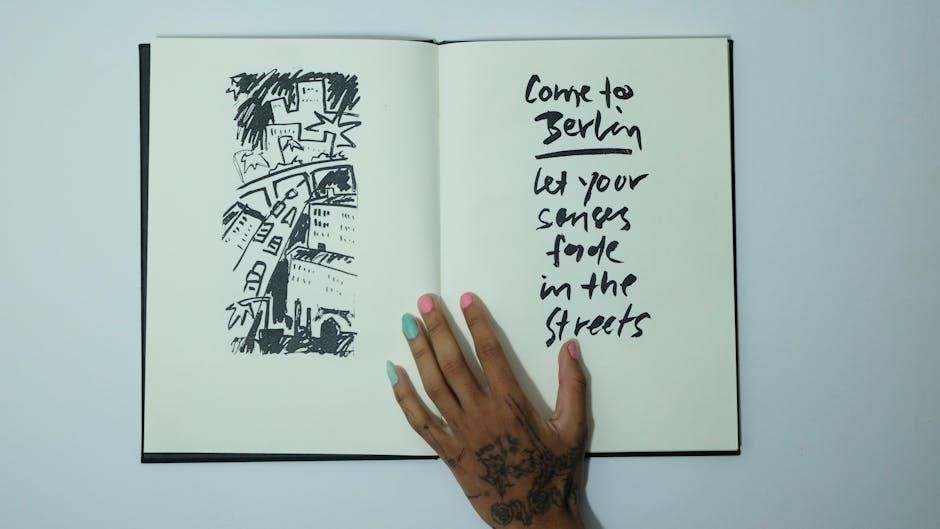
Drawing Words and Writing Pictures isn’t a traditional “how to draw” guide; instead, it focuses on crafting compelling narratives
through visual storytelling, offering accessible lessons for both classroom and self-study․
Overview of the Book’s Purpose
Drawing Words and Writing Pictures fundamentally aims to equip creators with the tools to transcend basic art skills, emphasizing the crucial connection between writing and visual representation․
The book deliberately avoids focusing on drawing instruction, instead prioritizing techniques to imbue drawings with depth and dimension․ It guides readers through penciling strategies, effective lettering, and impactful inking methods – all geared towards strengthening narrative communication․
Designed for both formal classroom settings and independent learning, the book’s purpose is to unlock a deeper understanding of how to merge text and imagery into a cohesive and compelling comic form, moving beyond simply illustrating a script․
Target Audience: Aspiring Comic Creators
Drawing Words and Writing Pictures is specifically tailored for individuals eager to break into the world of comic creation, encompassing manga, graphic novels, and broader visual storytelling forms․
While not a beginner’s drawing course, the book welcomes those with some existing art skills who wish to elevate their narrative abilities․ It appeals to “serious readers” seeking in-depth knowledge presented in an engaging, witty, and informal style․
The text’s accessibility makes it ideal for both teachers utilizing it in classrooms and individuals pursuing self-directed study, offering a unique pathway for aspiring comic artists․
Core Concepts: Beyond Basic Art Skills
Drawing Words and Writing Pictures transcends fundamental art techniques, emphasizing writing for visual mediums, dimensional penciling, and expressive lettering to enhance storytelling․
Focus on Writing for Visual Storytelling
Drawing Words and Writing Pictures uniquely prioritizes narrative construction for comics, rather than simply teaching artistic rendering․ The book steers away from basic drawing instruction, instead concentrating on how to effectively communicate stories through sequential art․
It emphasizes that strong writing is paramount, and that visuals should serve to amplify and enhance the narrative, not merely illustrate it․ This approach encourages creators to think critically about pacing, dialogue, and character development specifically within the context of a visual medium․
The text guides readers to merge words and images, creating a synergistic effect that elevates the overall storytelling experience, drawing inspiration from artists like Maira Kalman․
Dimension Through Penciling Strategies
Drawing Words and Writing Pictures details how to imbue drawings with depth and impact before inking․ It’s not about artistic skill, but about utilizing penciling techniques to convey form, space, and emotion․ The book explores methods for creating a sense of three-dimensionality on a two-dimensional surface․
These strategies involve careful consideration of line quality, shadow placement, and the use of texture to suggest material and weight․ The text emphasizes that thoughtful penciling lays the groundwork for compelling visuals, enhancing the storytelling potential of each panel;
It’s about giving drawings dimension, not just depicting them․
Lettering Techniques and Visual Voice
Drawing Words and Writing Pictures dedicates significant attention to lettering, recognizing it as far more than simply adding text to panels․ The book argues that lettering is visual storytelling, possessing its own distinct voice and contributing to the overall mood and pacing․
It explores various techniques for balloon shapes, font choices, and sound effects, demonstrating how these elements can amplify emotional impact and character personality․ The authors emphasize that thoughtful lettering integrates seamlessly with the artwork, enhancing clarity and immersion․
Lettering isn’t an afterthought; it’s integral to the narrative․

Penciling Strategies for Depth
Drawing Words and Writing Pictures emphasizes giving dimension to drawings, not teaching basic art skills, utilizing penciling strategies to enhance visual storytelling and narrative impact․
Utilizing Line Weight and Texture
Drawing Words and Writing Pictures delves into how strategic line weight dramatically impacts a panel’s readability and emotional resonance․ Varying line thickness isn’t merely stylistic; it directs the viewer’s eye and establishes visual hierarchy within the frame․
The book explains how heavier lines can define foreground elements or emphasize crucial details, while thinner lines recede into the background, creating a sense of depth․ Furthermore, exploring texture—through hatching, cross-hatching, or stippling—adds visual interest and communicates material qualities․
These techniques aren’t about replicating reality, but about suggesting it effectively, enhancing the storytelling power of each image and contributing to a richer, more immersive reading experience․
Panel Layout and Composition
Drawing Words and Writing Pictures emphasizes that panel arrangement is a crucial storytelling tool, far beyond simply containing images․ The book details how different panel shapes and sizes can influence pacing and mood, accelerating or decelerating the narrative flow․
Composition within each panel is equally vital․ Utilizing the principles of design – leading lines, rule of thirds, and negative space – guides the reader’s eye and focuses attention on key elements․
Effective panel layout and composition aren’t about aesthetics alone; they’re about clarity, impact, and ensuring the visual narrative seamlessly complements the written word, creating a cohesive and engaging comic experience․
Inking Techniques: Bringing Drawings to Life
Drawing Words and Writing Pictures explores pen and brush inking methods, demonstrating how to create contrast and visual interest, ultimately transforming pencil work․
Pen and Brush Inking Methods
Drawing Words and Writing Pictures delves into the practical application of both pen and brush inking techniques, recognizing each tool offers unique expressive possibilities․ The book doesn’t simply present these as stylistic choices, but as integral components of visual storytelling․
It guides readers through understanding how varying pen nibs and brush sizes impact line quality, texture, and overall visual weight․ Exploring these methods allows creators to enhance depth and mood within their panels․ The text emphasizes that inking isn’t merely tracing, but a crucial stage for refining and solidifying the narrative impact of the artwork, bringing drawings to life․
Creating Contrast and Visual Interest
Drawing Words and Writing Pictures highlights how strategic contrast is vital for captivating readers․ This isn’t limited to light and shadow; it extends to varying line weights, textures, and the interplay between detailed and simplified areas within a panel․
The book demonstrates how manipulating these elements directs the viewer’s eye, emphasizing key focal points and establishing a clear visual hierarchy․ Effective contrast enhances the emotional impact of scenes and prevents artwork from appearing flat or monotonous, ultimately boosting visual interest and narrative clarity․
The Interplay of Words and Images
Drawing Words and Writing Pictures emphasizes merging text and visuals, drawing inspiration from artists like Maira Kalman, to create richer, more impactful storytelling․
Merging Text and Visuals Effectively
The book champions a holistic approach, moving beyond simply illustrating text; it’s about a symbiotic relationship where words and images amplify each other’s meaning․
Frank Chimero’s appreciation of Maira Kalman highlights this, noting the scarcity of examples effectively blending the two․ Drawing Words and Writing Pictures provides methods for achieving this synergy, encouraging creators to consider how text can become part of the visual landscape, and vice versa․
It challenges the notion of “seas of text without pictures,” advocating for a balanced composition where both elements contribute equally to the narrative’s power and emotional resonance․
Influence of Maira Kalman’s Work
Maira Kalman’s approach to integrating words and images serves as a key inspiration for Drawing Words and Writing Pictures․ Frank Chimero emphasizes Kalman’s work as a rare example of truly successful merging of these elements, a skill many designers and illustrators seek․
Kalman’s books demonstrate a unique ability to weave text seamlessly into visual narratives, enriching the storytelling experience․ The book encourages creators to study her techniques, learning how to utilize text not just as dialogue or captions, but as a visual component itself․
This influence underscores the book’s core philosophy: visual storytelling is about more than just drawing․
Classroom and Self-Study Applications
Designed for both teachers and individual learners, the book includes homework assignments, extra credit projects, and further reading suggestions to enhance skill development․
Homework Assignments and Exercises
Drawing Words and Writing Pictures actively encourages practice through thoughtfully designed exercises․ These aren’t simply about replicating techniques, but about internalizing the principles of visual storytelling․ Assignments prompt creators to experiment with panel layouts, explore different lettering styles to convey emotional nuance, and refine penciling strategies for depth and clarity․
The book’s structure lends itself well to a workshop environment, fostering collaborative critique and peer learning․ Exercises often involve rewriting scenes, adapting existing stories into comic form, or developing original narratives with a strong emphasis on the interplay between text and image․ These tasks build confidence and a deeper understanding of the craft․
Further Reading and Resources
Drawing Words and Writing Pictures doesn’t exist in a vacuum; it actively points readers towards a wealth of supplementary materials․ The book includes suggestions for further reading, expanding on concepts like visual narrative, comics history, and the work of influential artists․ These resources aim to deepen understanding and inspire continued exploration․
Beyond books, the authors encourage engagement with the broader comics community․ Online platforms, like the vibrant r/comic_crits subreddit, offer valuable opportunities for feedback and collaborative learning․ Exploring diverse comics and graphic novels, analyzing their techniques, and actively participating in discussions are key to growth․

“Drawing Words and Writing Pictures” in the Comic Community
The book fosters discussion and learning, notably through platforms like Reddit’s r/comic_crits, where users share work and lessons inspired by the text․
Discussion and Collaborative Learning
Drawing Words and Writing Pictures actively encourages a collaborative learning environment․ The book’s concepts lend themselves well to group critique and shared exploration of techniques․ Online communities, such as the Reddit forum r/comic_crits, demonstrate this perfectly․ Users frequently propose tackling the book’s exercises together, providing feedback on each other’s work and deepening their understanding of visual storytelling․
This shared learning experience extends beyond simply completing assignments; it fosters a supportive space for experimentation and growth, allowing aspiring comic creators to learn from diverse perspectives and refine their skills through constructive criticism․ The book’s accessibility makes it ideal for these collaborative endeavors․
Reddit’s r/comic_crits and Shared Lessons
The r/comic_crits subreddit serves as a vibrant hub for individuals engaging with Drawing Words and Writing Pictures․ Users actively initiate threads dedicated to working through the book’s lessons collectively, sharing their exercises and seeking feedback from the community․ This platform provides a valuable space for peer review, allowing creators to receive constructive criticism on panel layout, composition, and the integration of text and visuals․
Discussions often center around specific challenges presented in the book, fostering a deeper understanding of the core concepts and promoting collaborative problem-solving among aspiring comic artists․
Beyond Manga and Graphic Novels
This book’s principles extend beyond comics, benefiting anyone exploring visual storytelling—from illustration to design—expanding creative boundaries and narrative techniques․
Applicability to Various Visual Storytelling Forms
The techniques detailed within Drawing Words and Writing Pictures aren’t confined to the realms of manga or graphic novels․ Its core principles—merging text and visuals, dynamic panel layouts, and thoughtful lettering—prove invaluable across diverse visual storytelling mediums․ Consider its relevance to illustration, animation storyboarding, advertising, and even interactive media design․
The book’s emphasis on visual communication transcends specific art styles, offering a foundational understanding of how to convey narrative effectively through imagery․ It encourages creators to think critically about the interplay between words and pictures, fostering a more holistic approach to visual storytelling, regardless of the chosen format․ This adaptability makes it a powerful resource for a broad spectrum of artists and designers․
Expanding Creative Boundaries
Drawing Words and Writing Pictures actively challenges conventional approaches to comics creation, urging artists to move beyond formulaic structures․ It inspires experimentation with narrative pacing, visual metaphor, and unconventional panel arrangements․ By prioritizing the writing aspect of comics, the book encourages creators to develop unique visual voices and explore innovative storytelling techniques․
The text fosters a mindset of continuous learning and creative risk-taking, prompting artists to question established norms and forge their own paths; It’s about understanding the ‘why’ behind visual choices, not just the ‘how,’ ultimately leading to more compelling and original work that pushes the boundaries of the medium itself․